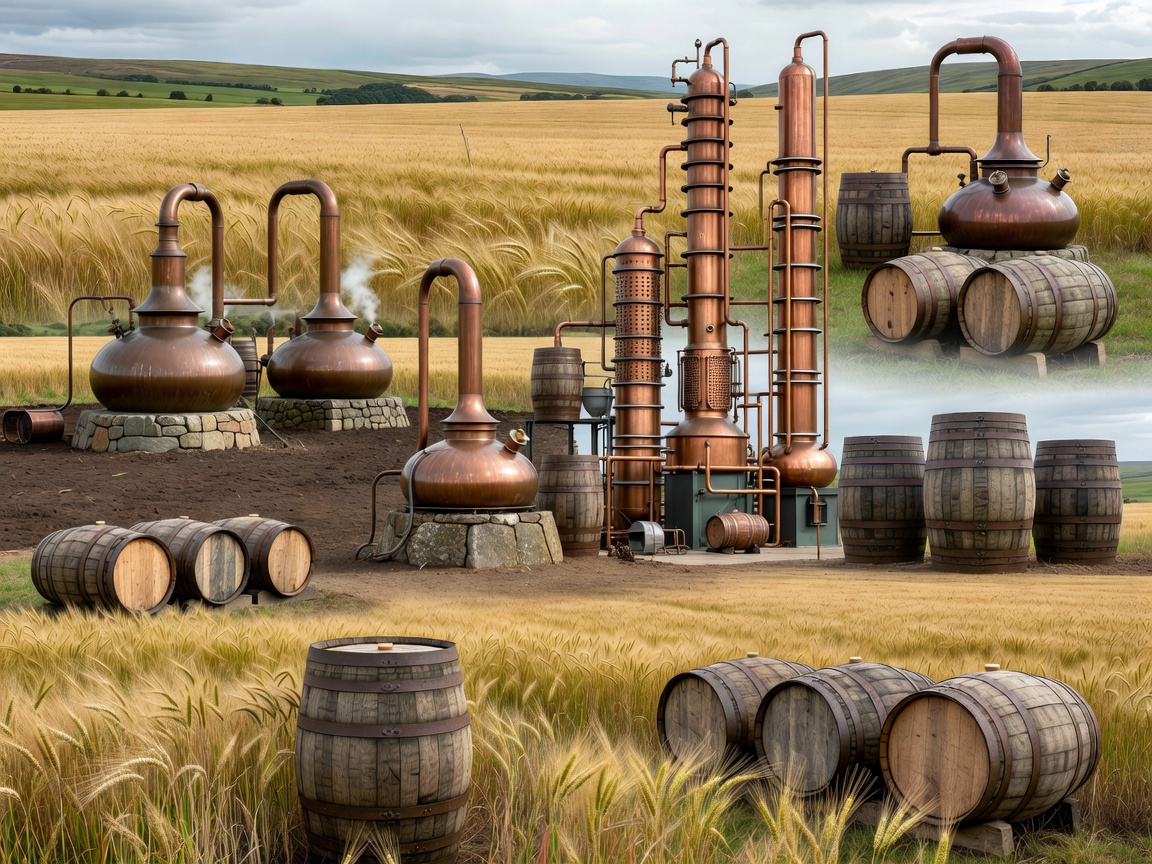
Why are the Lowlands associated with lighter whisky?
Part of the answer lies in production history, market access and the region’s relationship with blending. Lowland distilleries stood near major population centres, ports and transport routes. Large-scale grain whisky production became important, while surviving malt distilleries such as Auchentoshan and Glenkinchie helped establish a public picture of relatively delicate spirit.
The Highland Line legally distinguishes the Lowland and Highland Scotch whisky regions, but it does not change the chemistry of spirit at the border. A Lowland designation describes origin. It does not require floral aroma, unpeated malt or triple distillation. Newer producers have broadened the visible range with varied barley, yeast, fermentation, still and cask choices. The stereotype now functions best as historical context rather than purchasing instruction.
Is Lowland single malt always triple distilled?
No. Auchentoshan is closely associated with triple distillation, but double distillation is common across Scotch malt production and is used by Lowland distilleries too. Triple distillation introduces another stage of separation and can create a higher-strength, lighter new make, depending on still design and cut policy. It does not automatically make whisky smoother, better or devoid of cereal weight.
Production starts with malted barley for single malt. Milling and mashing generate wort, whose clarity can influence the eventual spirit. Fermentation creates alcohol and flavour compounds. Distillation then concentrates and selects. Tall stills, rising lyne arms and extensive copper contact may promote a lighter profile; shorter stills, wider cuts or limited copper contact may retain heavier compounds. Every one of those sentences needs “may”, because distilleries combine variables rather than adjusting a single flavour dial.
Peat also resists simple geography. Lowland malt is commonly unpeated, but producers can specify peated malt. Meanwhile, long fermentation can build pronounced fruit that makes a light spirit aromatic rather than slight. “Delicate” should not be confused with “empty”; one describes balance, while the other generally describes an unsuccessful afternoon.
What role does grain whisky play in Lowland identity?
Grain Scotch whisky is produced from cereals that may include wheat or maize alongside some malted barley, generally using continuous column stills rather than the pot stills required for single malt. Lowland sites have been central to grain whisky production and to the supply of spirit for blended Scotch. Column distillation can produce spirit at a high strength with a comparatively light character, making it suitable for blending and long maturation.
“Single grain Scotch whisky” means grain whisky from one distillery. It does not mean one grain, one cask or an agricultural single-variety product. Mature single grain can show vanilla, coconut, caramel, polish and tropical-fruit notes, particularly after extended interaction with oak. The category receives less regional romance than malt, perhaps because a column still looks less willing to pose against a sunset.
Which casks suit a lighter Lowland spirit?
Ex-bourbon barrels often support citrus, vanilla, fresh fruit and cereal notes without overwhelming the distillate. Refill wood can preserve even more of the spirit’s original character. Sherry-seasoned oak supplies dried fruit, spice and tannin, while wine casks may introduce colour and strong fruit influence. None is intrinsically superior; the trade-off is between transparency and oak impact.
A lighter new make can be highly responsive to active wood, which is useful when the match works and rather conspicuous when it does not. Age alone cannot settle the issue. The cask’s prior use, oak species, size, warehouse position and number of previous fills may matter as much as time. An age statement still has legal value: it states the youngest whisky included.
How can modern Lowland whisky be compared sensibly?
Begin with category and distillery, then ask whether the spirit was double or triple distilled, peated or unpeated, and matured in active or refill wood. Auchentoshan offers a reference point for triple-distilled malt. Glenkinchie is commonly associated with a lighter, grassy and cereal-led style. Bladnoch can provide greater body and fruit. Daftmill is known for farm-based production, while newer Lowland distilleries demonstrate still broader approaches.
For a classic lighter profile, look for unpeated spirit and restrained ex-bourbon or refill maturation. For a richer version, seek clear sherry-cask details and a bottling strength that supports texture. For grain whisky, ignore the mistaken idea that it is merely unfinished blend material and inspect age and cask disclosure. The Lowlands reward careful reading chiefly because the old summary is so temptingly short.