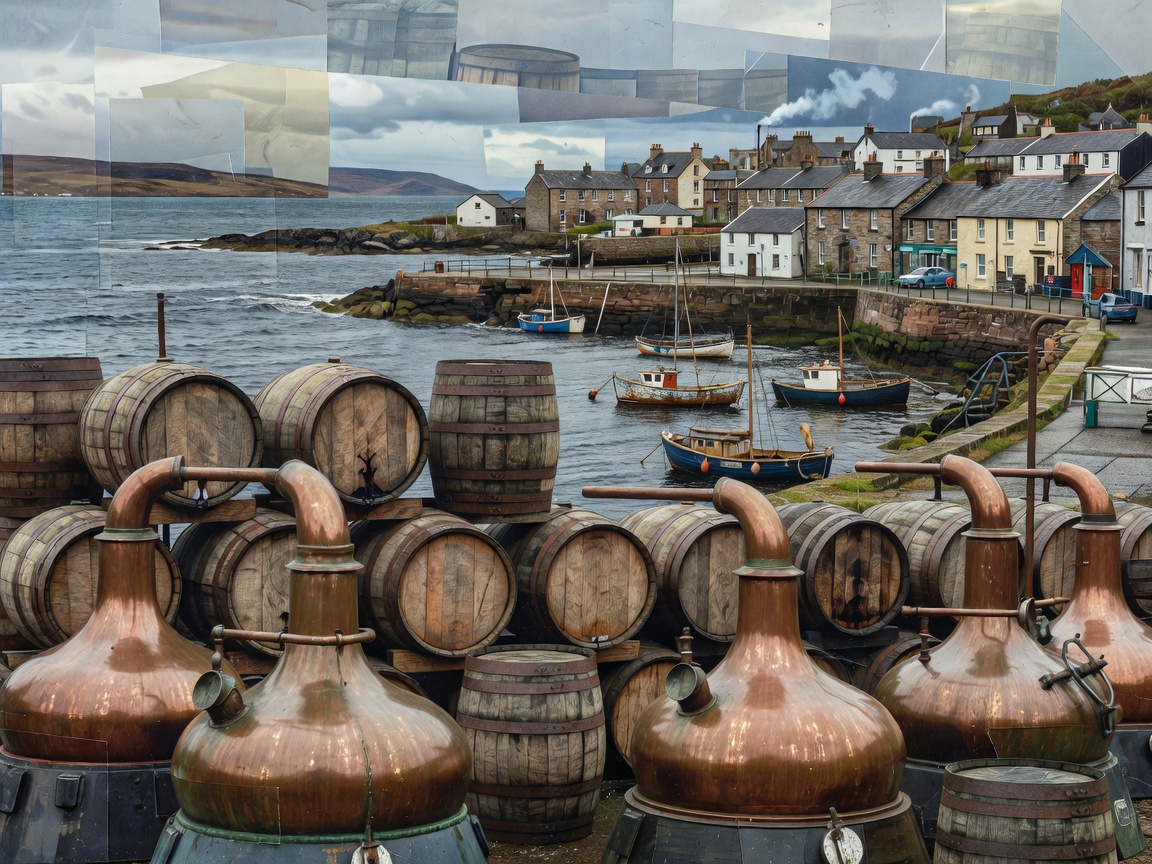
How did Campbeltown become a separate whisky region?
Campbeltown developed into a major distilling centre because Kintyre offered access to barley, peat, coal, water and maritime transport. The town once held many distilleries and shipped whisky efficiently to blending and trading markets. Expansion was followed by severe contraction as economic pressure, changing demand, overproduction and concerns about quality damaged the industry.
The region survived through a very small group of producers and retained legal recognition in the Scotch Whisky Regulations. That history matters because modern Campbeltown whisky is often discussed through scarcity and revival. Neither tells you what is in a particular bottle. History explains the region’s identity; process explains its spirit; demand mostly explains why conversation occasionally becomes undignified.
Do the remaining distilleries share one style?
No. Springbank distillery produces three malt styles under different names. Springbank is partially triple distilled and moderately peated; Longrow is double distilled and more heavily peated; Hazelburn is triple distilled and unpeated. These are not decorative sub-brands pasted onto identical spirit. Their malt specifications and distillation regimes create materially different makes.
Glengyle produces Kilkerran single malt, typically through double distillation and with a character often described using cereal, citrus, mineral, waxy and lightly smoky terms, depending on the release. Glen Scotia ranges across fruit, malt, spice and coastal associations, with cask choice having a strong effect. The region therefore offers multiple comparisons despite its limited physical scale.
Springbank retains a notably integrated production model including floor malting and bottling on site. That makes it useful when tracing how production stages connect, but it should not become a universal quality certificate. Labour-intensive practice can shape character and identity; the liquid still has to carry the case.
Where do oiliness, funk and brine come from?
“Campbeltown funk” is informal tasting language, not a regulated production term. It can gather together impressions of oil, engine grease, damp stone, mineral notes, fermentative fruit, smoke and coastal salinity. Different drinkers use it differently, so it works best when replaced by the specific sensation intended.
Texture and heavier aromas can arise through fermentation conditions, limited copper contact, cut points and the retention of robust compounds during distillation. Partial triple distillation complicates the familiar double-versus-triple division: portions of spirit move through different still sequences before blending into the final new make. The result cannot be explained merely by counting stills.
Peat ranges from absent to pronounced. Smoke may appear earthy, sooty or coastal depending on spirit and maturation. Briny descriptions do not prove that salt crossed the cask wall. They identify a sensory resemblance. Whisky vocabulary is metaphorical enough without granting sodium chloride a warehouse access pass.
How does maturation alter Campbeltown’s weight?
Ex-bourbon barrels can preserve citrus, cereal, smoke and oily texture while adding vanilla and sweetness. Sherry-seasoned casks may layer dried fruit, spice, nuts and tannin over an already robust spirit. Port, rum and wine casks appear in some releases and can create expressive contrasts. The risk with highly active secondary casks is the same as elsewhere: maturation can become the main act and spirit the increasingly nervous support band.
Refill casks are valuable when the distillate has enough character to carry extended maturation. Batch composition also matters. A core release may combine cask types to maintain balance, while a single-cask bottling shows one narrower outcome. Single cask does not mean more representative, only more specific. Natural variation between casks is part of its appeal and its warning label.
What should buyers infer from a Campbeltown label?
Check the legal category and actual distillery. Springbank, Longrow and Hazelburn originate at the same distillery but identify distinct production styles. Kilkerran is distilled at Glengyle; the naming reflects historical trademark circumstances rather than a mystery fourth operating site. Glen Scotia identifies its own distillery and range.
- Partial triple distillation
- A production arrangement in which parts of the spirit follow different distillation paths; it is not simply “two and a half times”.
- Local barley
- A statement about barley origin. It does not by itself describe peat level, fermentation or cask quality.
- Single cask
- Whisky from one cask, commonly with a cask number and yield stated. It may differ sharply from the house profile.
- Batch release
- A vatting assembled for a particular bottling run. Cask composition may change between batches.
Compare peat level, distillation method, cask composition and bottling strength before comparing age alone. Campbeltown’s reputation rests on characterful spirit, but reputation is not a flavour compound. Precise labels and producer information remain the better route through a region whose compact map conceals a surprising amount of machinery.