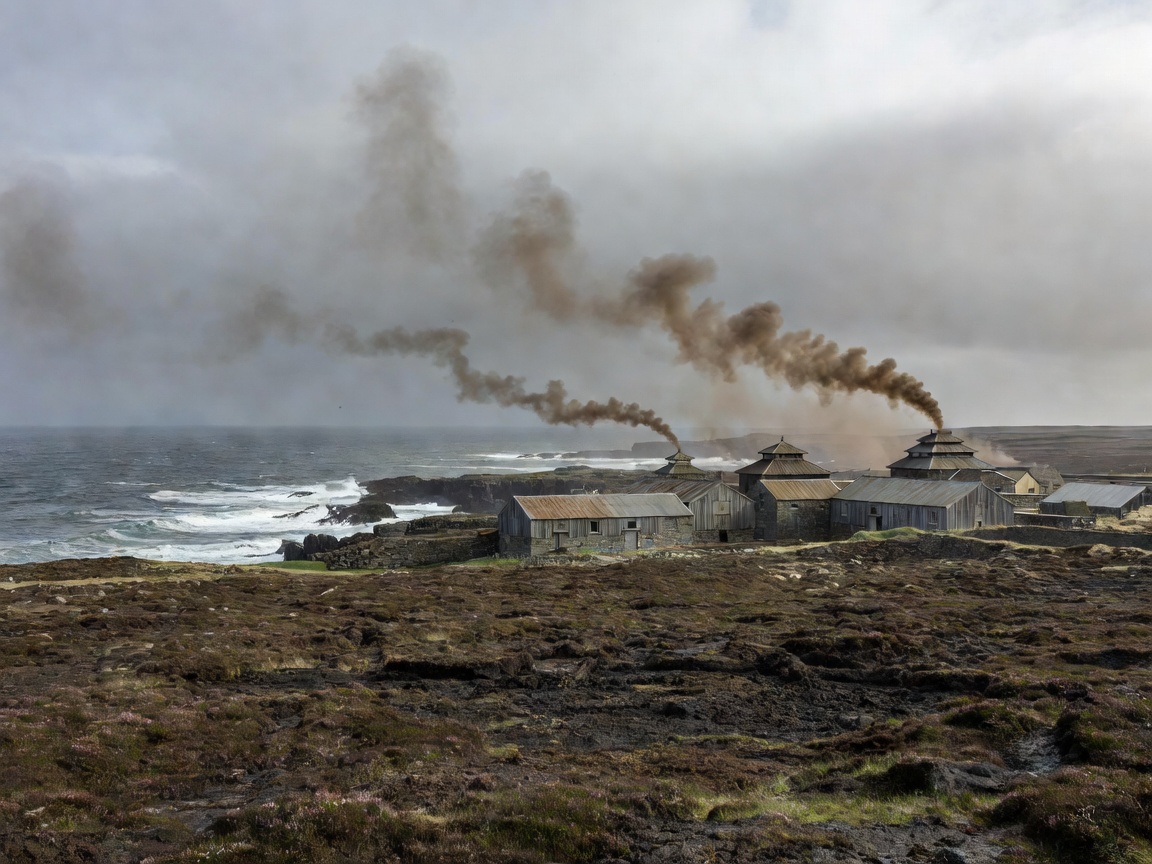
Why does Islay whisky so often taste smoky?
Many Islay malts use barley dried with peat smoke. Burning peat releases phenolic compounds that adhere to the damp malt and survive, in altered form, through mashing, fermentation, distillation and maturation. Their sensory effect can suggest bonfire ash, tar, iodine, smoked food, damp earth or herbs. Those are descriptions, not ingredients lurking in the bottle with tiny labels.
Maltsters may state phenol levels in parts per million for the malt before production. That figure does not translate directly into perceived smoke in mature whisky. Milling, mashing, fermentation, still operation, cut points, cask influence, age, dilution and the drinker’s own sensitivity all interfere. Comparing quoted peat figures as if they were engine outputs is wonderfully neat and only partly useful.
Ardbeg, Laphroaig and Lagavulin are strongly associated with peated styles. Bruichladdich produces unpeated spirit under its main name while using Port Charlotte for heavily peated malt and Octomore for exceptionally heavily peated releases. Bunnahabhain is widely known for an often unpeated core style, though it also produces peated whisky. Islay has already escaped its own pigeonhole.
What matters besides the peat level?
Fermentation builds fruit, acidity and complexity before distillation concentrates and separates them. Longer fermentations can permit more bacterial activity after yeast has done most of its work, adding esters and other compounds. Washback material, wort clarity and yeast choices affect the result. A smoky malt can therefore carry citrus, orchard fruit, tropical fruit or lactic notes beneath the phenols.
Still shape and cut policy determine which compounds enter new make spirit. A narrow spirit cut can favour a more controlled profile; a wider cut may retain heavier or more pungent material. Condensers also matter. Copper contact generally removes sulphur compounds, while reduced copper interaction can preserve weight. The still house, not the coastline, decides these details.
Traditional floor malting remains visible at several Islay distilleries, but it does not necessarily provide all the malt they use. Commercial maltings can deliver barley to a producer’s required specification. Romantic photographs of malt floors are therefore part production, part symbol and entirely capable of doing excellent work on a brochure.
Does island maturation make whisky taste maritime?
Warehouses near the sea encourage the language of salt spray and brine, but direct causal claims deserve restraint. Casks breathe through oak, yet salt itself is not simply blown through warehouse walls and deposited as flavour. Distillery character, peat-derived compounds and maturation can create impressions described as maritime without requiring literal seawater involvement.
Ex-bourbon barrels are common and can frame peat with vanilla, citrus and sweetness. Sherry-seasoned casks may add dried fruit, spice and richer oak structure. Wine finishes can create vivid contrasts, although heavy finishing may cover quieter distillate details. Refill wood gives mature spirit more room to speak. Mainland maturation is also possible, so an Islay distillery name does not prove every year was spent beside an Islay shore.
Which Islay label details repay attention?
First identify whether the bottle is single malt, blended malt or another Scotch category. A named Islay distillery on a single malt identifies where the spirit was distilled. An “Islay single malt” without a disclosed distillery may be a legitimate independently bottled whisky whose source remains confidential.
- Peated
- Indicates peat smoke was used in malt preparation, but rarely predicts the exact sensory intensity.
- Age statement
- Refers to the youngest whisky included. Peat character may change with maturation rather than merely fading in a straight line.
- Finish
- Indicates secondary maturation in another cask type. Look for wording that separates the initial cask from the finishing cask.
- Strength
- Higher bottling strength can carry more texture and aroma, while water added in the glass allows adjustment.
How can Islay styles be compared without reducing them to a smoke contest?
Compare the shape of the smoke: ashy, earthy, medicinal, tarry or aromatic. Then consider fruit, sweetness, texture and cask influence. Caol Ila is often discussed in terms of cleaner smoke and citrus; Laphroaig tends to invite medicinal descriptors; Ardbeg is frequently associated with intense peat alongside citrus and tarry notes; Bowmore often sits in a more moderate, balanced register. Individual bottlings can contradict all four summaries.
For clearer distillery character, examine ex-bourbon or refill-cask expressions. For smoke against dried fruit and spice, look for explicit sherry-cask information. Anyone exploring rather than collecting trophies should compare disclosed production details and bottling strength. The loudest peat number on the box may win the typography competition. It need not win anything else.